Taking Up Space: Plus-Sized Women Navigate Beauty Standards at Hampton University
By Jasmine Brockington
Fitting In, Standing Out
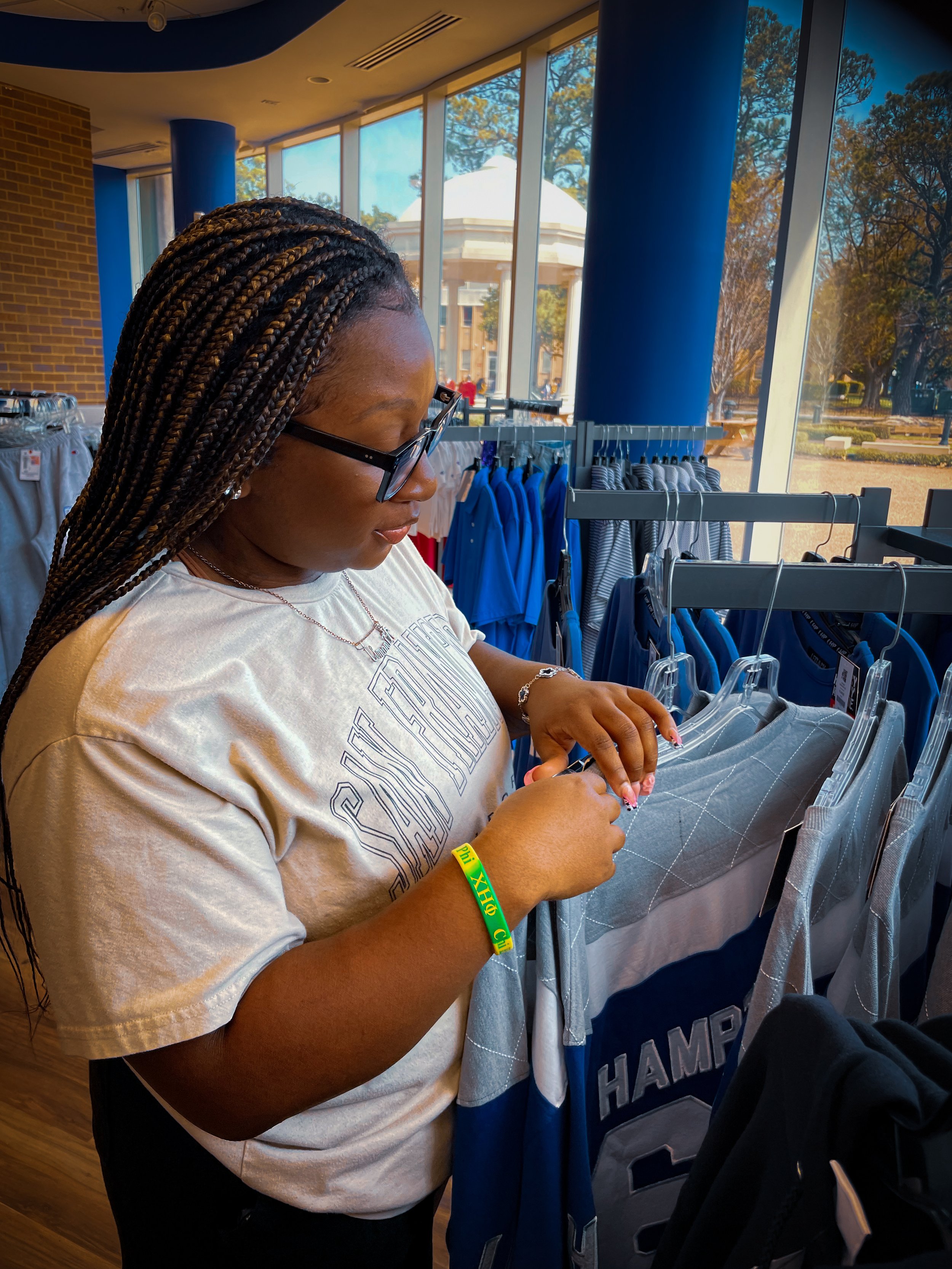
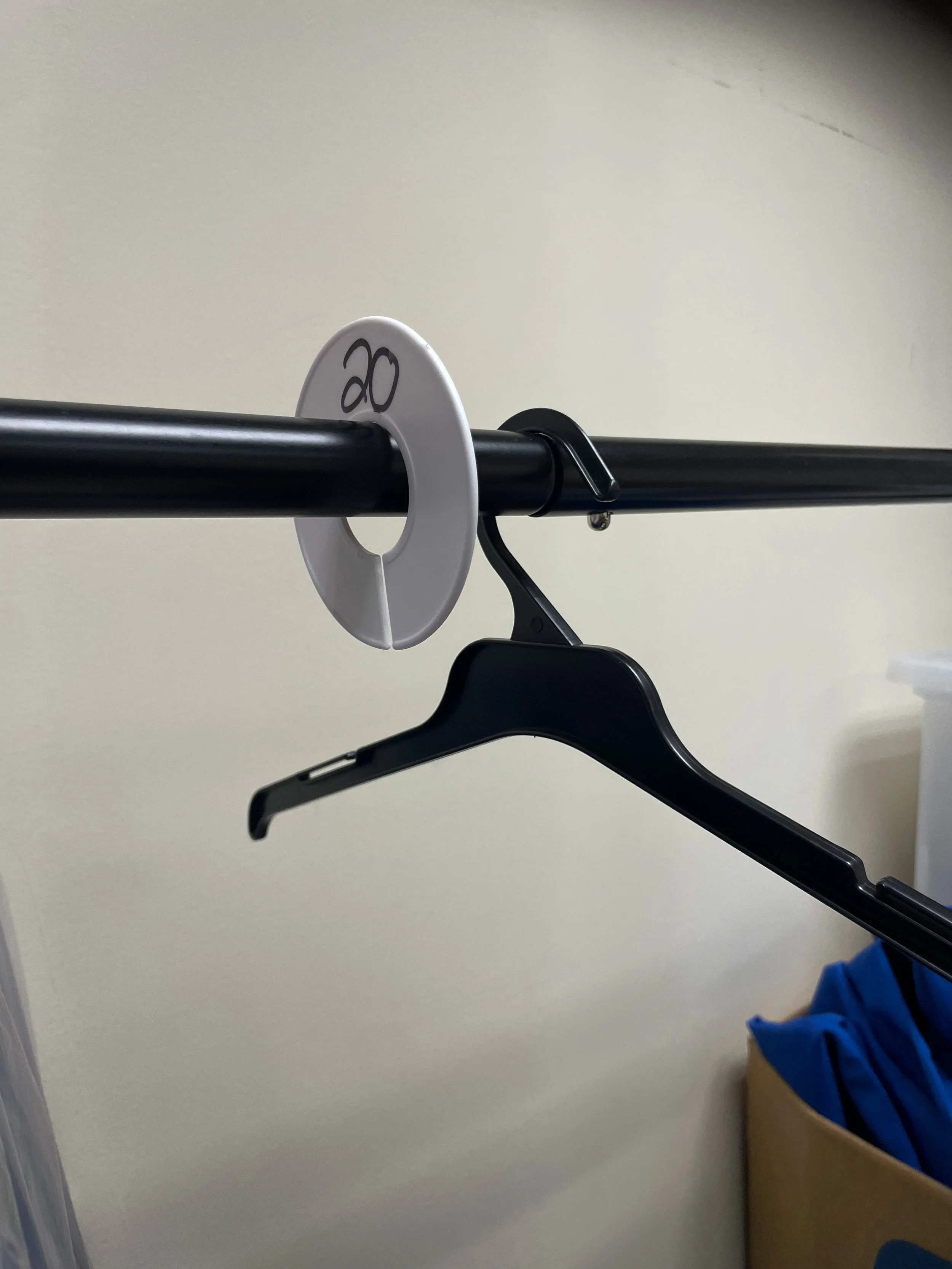
The racks inside the Hampton University bookstore are filled with navy blue and white clothes like hoodies , T-shirts, and
crewnecks that signal pride, tradition, and belonging. For many students,
picking out an outfit is part of the Hampton experience, a small but meaningful way to feel connected to campus life.
But for some students, that moment never quite comes.
For plus-sized women, what should be a simple act, grabbing a sweatshirt before a game or finding something to wear for Homecoming, can turn into a quiet search for anything that fits.
Instead of choosing what they like, they are often left taking what they can find, which usually consists of men’s clothing, navigating spaces that were not designed with their bodies in mind.
In those moments, the excitement of participating in campus culture can shift into something else: frustration, exclusion, and the subtle feeling of being overlooked.
“Buying clothes in the Hampton bookstore, they don’t sell plus size clothes. So due to this, a lot of the Hampton clothes that I have are men’s clothes,” said Ayana Currie, a Hampton student whose experience reflects a broader reality for many others.
While wearing Hampton University merchandise is just one tradition, many plus-sized women say it points to a larger pattern across campus. From social media pressures to limited representation in pageants and promotional materials, these students are often navigating spaces meant to celebrate Black excellence, while still searching for a place to fully see themselves within it.
The Rules They Didn’t Write for Us
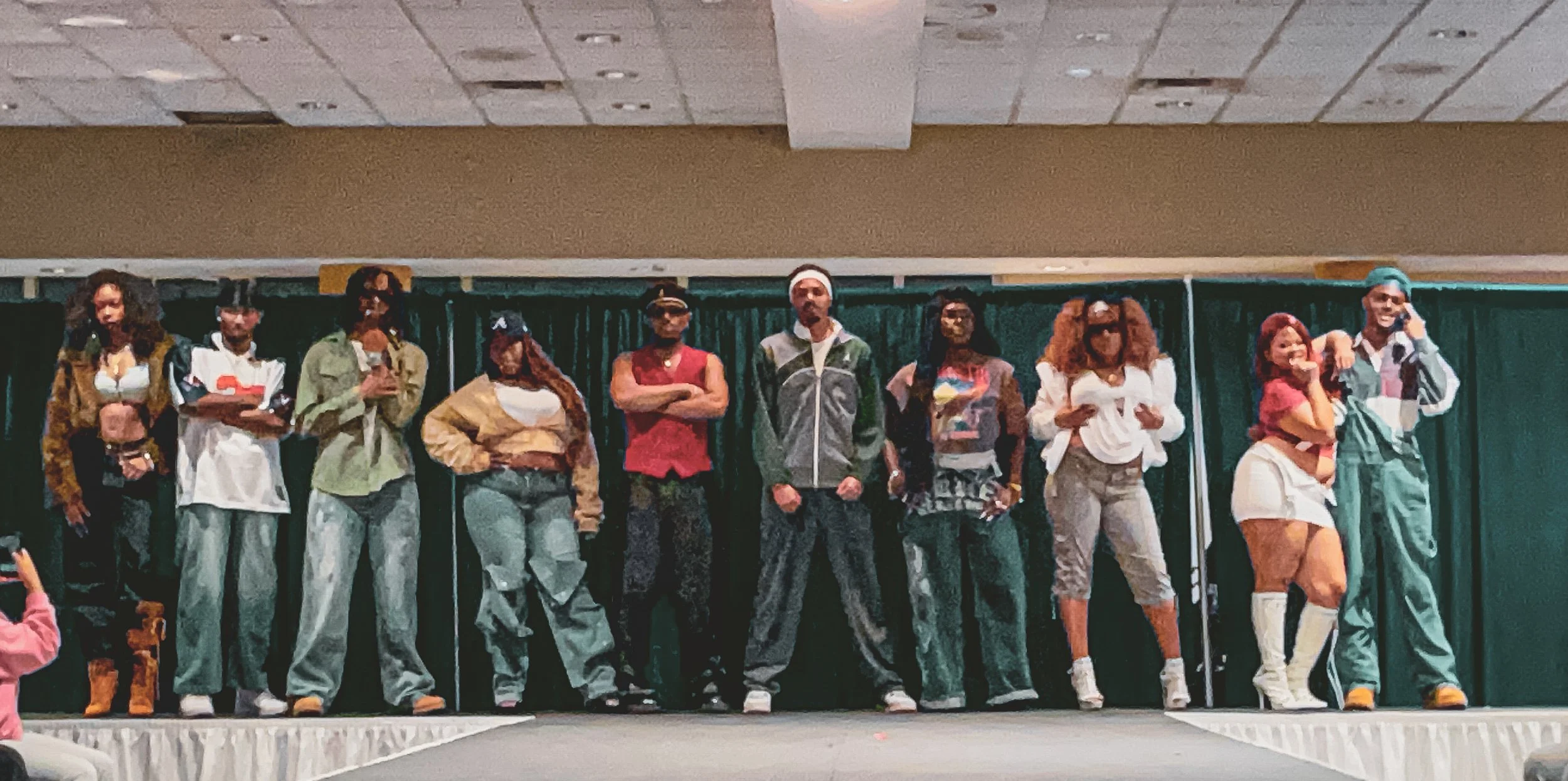
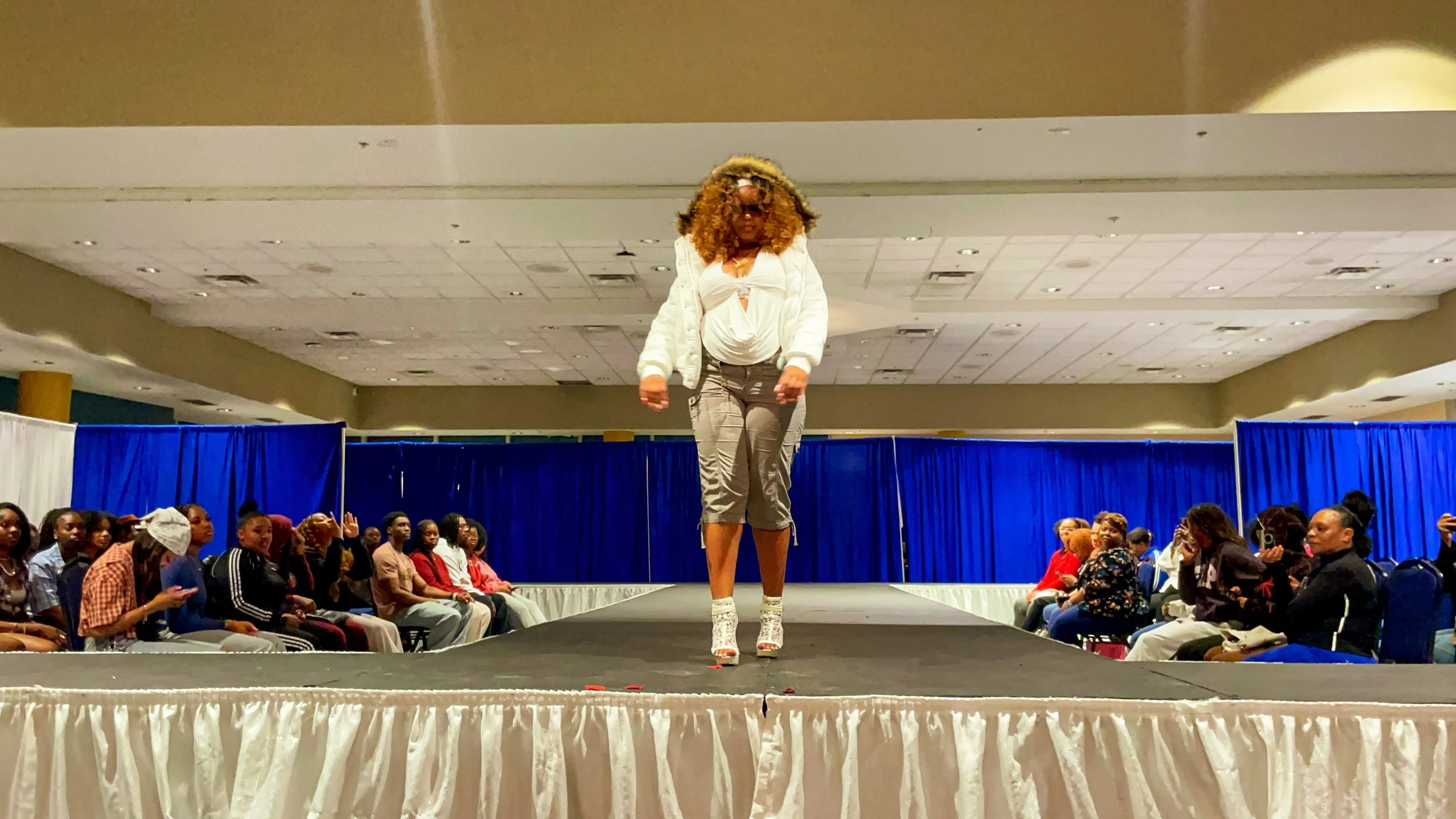
At Hampton, students find ways to step out of their shells through pageants, the annual Freshman Fashion Show or
Homecoming Fashion Show, or by performing on stage in the Divine Nine dance activities like ‘Train like an Alpha’ or ‘Shimmy like a Nupe’.
For plus-sized women, the feeling of self-consciousness can make those opportunities feel out of reach for someone their size.
“When it came to pageants on this campus, I just was never in one because I just felt like they were not targeted to us,” said Kiyah Stokes, a plus-sized Hampton woman.
Beyond pageants, many plus-sized women feel weighed down by societal expectations before they even arrive on campus.
“Society has been taught that plus size women should always play the back role, never take up more space then they should need to, stay quiet, not be in the limelight, or to change to fit what society deems is beautiful,” Kiyah added.
Fashion is another daily battle since students feel that they have to follow the unwritten rules about how plus-sized women “should” dress.
“I feel like, plus size women are always taught to not show skin,” said Krystal Virigil, a Hampton student who struggled with finding her style,
“I have definitely had my moments where I won't go to a party or event because I don’t know what to wear.”
For these women, every outfit choice becomes an internal back and forth between self-expression and following society norms.
Clothing isn’t just about style, it’s about feeling confident, being seen, and finding places on campus where representation can feel limited.
Finding a Size in a World That Isn’t Made for You
Attending a historically Black college or university like Hampton University comes with a baseline assumption: everyone is Black. For some plus-sized students, that baseline just means there are more ways to stick out and feel more visible and vulnerable in their new home for 4 years.
“I just felt like the black sheep in every space that I was in, and it's really difficult to realize that you can still be a black sheep even when you are amongst other black sheep, just because of another difference,”
said Kiyah Stokes, a third-year Hampton student on her experience.
For Ayana Currie, those feelings followed her into almost every aspect of campus life.
“Having a smaller roommate at college, I used to have an irrational fear that my roommate would constantly think about how much bigger than them I am,” she said.
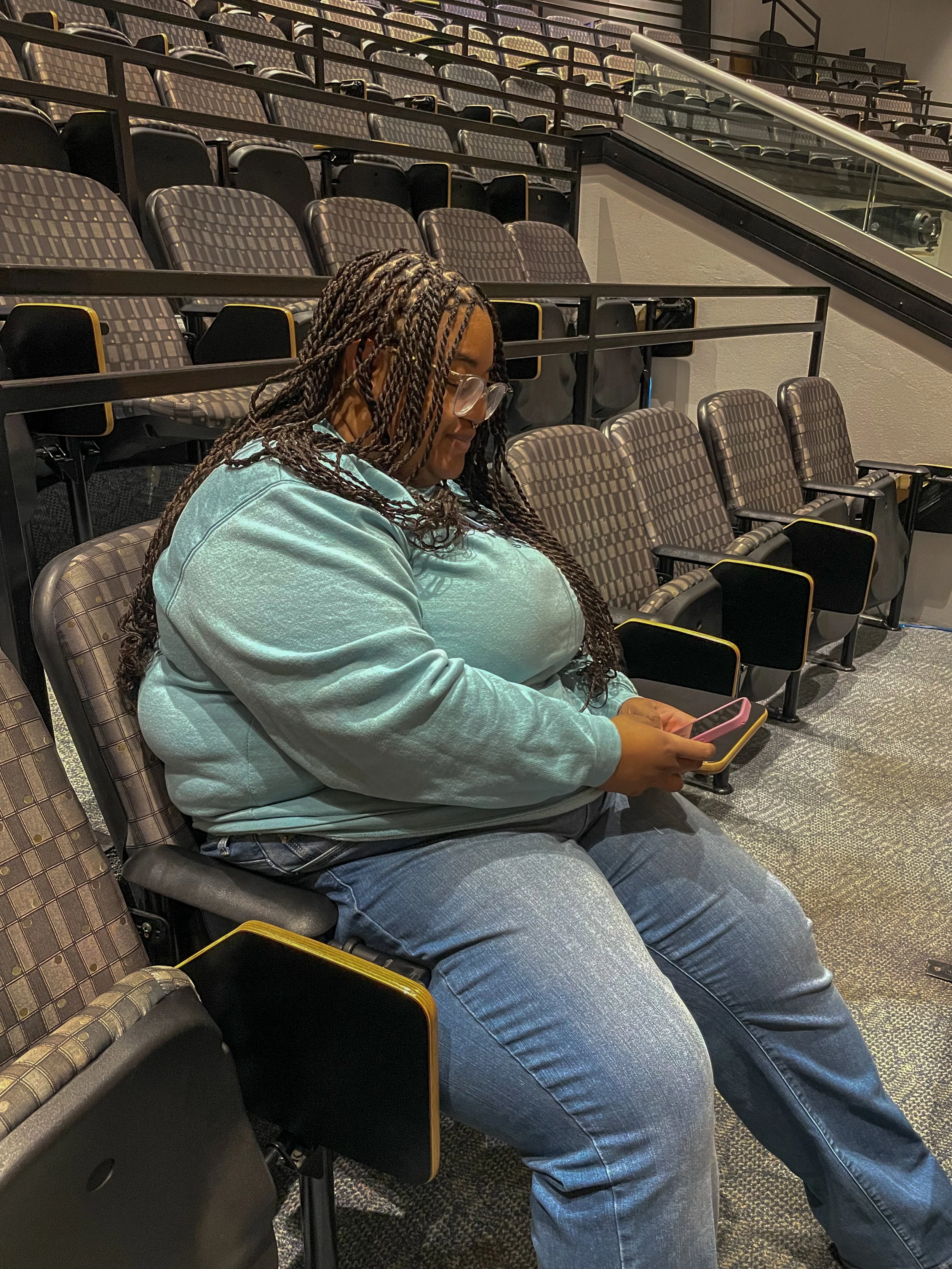
“Being in class, the desks don’t even fit me. I always feel like people can tell I look uncomfortable in those seats. Plus-size girls already get a bad rap. Like, ‘oh they stink, they’re smelly, ’ “said Currie.
“I always have some irrational fear that I smell like the worst person in the world. I never want to smell bad because then people are going to be like, ‘oh she smells bad because she’s big, not because she’s normal.’”
The lack of representation isn’t limited to social spaces, but it’s also in stores and campus marketing too.
“I wanted to be a fashion designer because I was like, okay, since they don't make clothes for us and in our size, but I want to look good. So, let me make clothes for myself,” said Jade Johnson, a Hampton student about the lack of representation in clothing.
For some students, the lack of representation extends beyond clothing and into how the university presents itself to prospective students. Marketing materials and promotional images often shape first impressions of what campus life will look like.
“I don’t remember seeing one plus-size girl in any of the Hampton brochures. A part of me was a little scared that everybody there wasn’t going to be plus-size or curvy,” said Daria Walker. “Yes, we’re all Black women and we all have curves, but I was nervous: am I going to go through my entire Hampton experience and not really get that deep connection feel?”
Even campus events and traditions can reflect certain beauty standards.
“Being plus size, and especially being a plus size woman, it shouldn't be difficult to traverse through life,” said Kania Coman, a Hampton student that was searching for a community. “ And so just having that community, especially in college, where we're going through relationships, you know, a bunch of different deals. It was just really important for me to find that community.”
These experiences highlight the importance of having safe, supportive communities on campus. One organization is working to create that space for plus-sized women at Hampton who are not only seen but celebrated for who they are.
“There were a lot of light skinned, skinny women. I think that Miss Hampton for the past few years had looked exactly the same,” said Avary Gillyard, a Hampton graduate who noticed this pattern and decided to make a space.
Campus Plus: Building a Space That Sees Us
Campus Plus was founded on February 16th, 2018, by Ava Gillyard when she was a sophomore at Hampton University. The organization was created to provide a safe, supportive space for plus-sized women, a place where they could feel confident, seen, and celebrated.
“If I’m being honest, I wanted to be able to go over to a friend’s room and just go through her closet and find something to wear without feeling like I looked crazy squeezing into the clothes,” Ava said. “Campus Plus was something created because I wanted people that look like me, someone I could relate to, somebody I could go out to eat with, somebody that got it.”
From small beginnings, the organization quickly grew into a place of community and empowerment. It challenged traditional beauty standards on campus, particularly through its unique pageants and fashion events.
At most HBCUs, pageants often include swimsuit categories that favor a smaller body type. The Quelumptuous pageant, a collaboration between Campus Plus and the Gamma Epsilon Chapter of Omega Psi Phi Fraternity, Inc., reframes confidence and beauty for plus-sized women, including a lingerie portion that celebrates curves and self-assurance.
“Even being plus-size, I could be a pageant girl,” said Imani Simpson, reflecting on her experience. “Seeing people cheer for you while wearing a dress, it truly builds character, it truly builds confidence.”
Campus Plus now hosts community service projects, clothing swaps, annual photo shoots, fashion shows, and
pageants that highlight plus-sized fashion.
The Hampton chapter has grown from its original 10 members to over 70, with additional chapters at Florida Agricultural and Mechanical University and Spelman College.
“Campus Plus, to me, means no matter your size, background, ethnicity, or where you are mentally, physically, or spiritually, if you come into our space, we’re going to welcome you with open arms,”
said Daria Walker, a Hampton University graduate and previous member of Campus Plus. “We’re not going to judge you or push you away.
If you want the love of sisterhood, we’re going to give it to you.”
Students say the organization has transformed their college experience.
“Before Campus Plus, I’d feel self-conscious seeing smaller, skinnier people. Now, seeing plus-size women confidently style themselves inspires me,”
said Alyssa Smith.
For many students, simply seeing women who share similar body types can make campus feel more welcoming.
“I love being around people that look like me and not feel uncomfortable,” added Krystal Virgil.
Even gaining administrative approval came with challenges, showing the extra effort required to create spaces that defy traditional norms.
“It’s crazy that people can be so negative about something meant to be positive. Campus Plus is about uplifting people, not shaming them,” said Alyssa.
Through persistence, creativity, and community, Campus Plus has become more than an organization; it's a movement, a celebration of self-love, confidence, and belonging for plus-sized women at Hampton University.
Personal Stories: Everyday Battles, Hidden Strengths
Being a plus-sized woman is a unique experience, especially in a space where body norms are constantly on display.
For Currie, it meant noticing differences everywhere she looked.
“Looking around, all my friends were a lot smaller than me, and I would always notice that and always take notice of my actions,” she said.
“I never wanted to look a certain way in public, or if I’m in the cafeteria.”
Even everyday spaces like the cafeteria can feel intimidating. While some students might enjoy going back for seconds or thirds in the buffet style layout, for plus-sized women, it can be a source of self-consciousness.
“I would say a little nerve-wracking with the cafeteria. Because, like, being plus size, everyone has the predetermined notion that everybody eats a lot.
And it's like, yeah, we have buffet style, but I think it’s more self-conscious of, let me not look like I’m getting so much food on my plate,” said Daria Walker.
For others, these experiences echo challenges they faced growing up. Imani Simpson recalls how a health change that affected her body led to bullying and emotional strain.
“My mom put me on birth control. I got huge. It was horrible. Going from a midsized person to being blown up like that really took a toll on me,” she said.
“People looked at you differently, and people were mean. I was bullied for that.”
Jade Johnson shared similar struggles during her school years.
“I was subjected to bullying throughout school, and that was a very, very hard time for me. I definitely had a lot of mental health issues and I dealt with a lot of depression,” she said. “I heard a lot of comments about my body and my weight. I always viewed myself differently when I was younger. I didn’t think I was as beautiful or capable as my peers who were smaller, because nobody paid us attention or romanticized us.”
Kiyah Stokes recalls a painful moment of objectification. It was a moment that reinforced the insecurities she had for years.
“I went to a party with a few of my slimmer friends. They got in for free, but the bouncer was looking at me and then told me, ‘Well, you have a pretty face for a big girl, so I’ll let you in.’ I felt very objectified and singled out,” she said.
Even in spaces meant to celebrate plus-sized women, scrutiny and ridicule can creep in. “A few weeks ago, we were practicing for the fashion show, and there were guys in the back just watching and laughing,” Krystil said. “There are people that will come to the pageant just to take pictures and post it on Fizz to make fun of them.”
These stories highlight the daily realities, anxieties, and external judgments that plus-sized women navigate on campus.
Beyond Hampton: A Culture of Size
The experiences of plus-sized women at Hampton University reflect a broader societal issue: representation. Across fashion, media, and cultural spaces, plus-sized bodies remain underrepresented and that lack of visibility has real consequences for confidence, mental health, and a sense of belonging.
According to Dr. Kristie Norwood, a licensed clinical psychologist, director of the Student Counseling Center, and psychology professor at Hampton University, these gaps in representation don’t just shape how people are seen, they shape how they see themselves, and how they move through the world.
“So we look at what the messages are and then how are those messages impacting behavior?” Norwood said. “Isolation, nervousness, difficulty concentrating and focusing. I'm so concerned about how people are viewing me… that now I'm not doing well in school—and it's really the anxiety about what's happening socially, not that I can't do the work.”
She explains that this anxiety is often reinforced through what psychologists call rumination—when negative thoughts about one’s body become constant and consuming.
“How much is somebody constantly thinking about their image?” she said. “Is it taking up more time than maybe it should? …And it's getting in the way of them actually living their life socially, academically, family-wise.”
Research supports this connection. Studies show that exposure to plus-size models can improve body satisfaction and reduce harmful social comparisons among college-aged women. Yet, these images remain scarce. In a content analysis of European fashion magazines, less than 0.5% of models were plus-size, demonstrating the ongoing invisibility of diverse body types in mainstream media (PubMed, 2023).
The fashion industry, particularly runway shows, mirrors this lack of inclusivity.
According to the Vogue Business Spring/Summer 2025 Size Inclusivity Report, only 0.8% of runway looks featured plus-size models, with straight-size models dominating at 94.9%.
This limited representation affects more than self-image—it shapes how plus-sized women move through spaces meant to celebrate achievement or culture.
“I wish people understood the humanity,” Norwood said. “The same aspects of life that even someone who's not plus size… are the same pieces that plus-size women navigate, but with the extra stigma.”
On HBCU campuses, these pressures intersect with race, creating a unique set of challenges for Black women.
At Spelman College in Atlanta, former Campus Plus president Savanna Brookshire says similar experiences shape how plus-sized women navigate campus life.
Brookshire recalls how something as simple as finding a dress for campus events could reinforce those feelings of exclusion.
“We have closets where students can find white dresses for events,” Brookshire said. “But when you look through them, most of the options are small and medium.
When you get to large and up, there might not be anything. And if there is, the options feel more… grandmotherly. Spaces like that can make you start to feel internally like, ‘Hey, maybe I’m not good enough.’”
Brookshire says the issue also extends to how HBCUs present themselves publicly.
“At a lot of HBCUs, especially ones considered ‘Black Ivies’ or prestigious institutions, there’s a very specific look they promote,” she said. “When you look at their social media pages, you’re not really seeing dark-skinned women up there, especially not ones who are plus-sized or full figured.”
Hampton’s Campus Plus organization is part of a larger movement across HBCUs, including chapters at Florida A&M University and Spelman College, addressing these gaps by creating safe, empowering spaces for plus-sized students to express themselves, participate in pageants, and embrace fashion without judgment.
Influencers like Tess Holliday note that plus-size models are increasingly overlooked in favor of returning thinness trends per People Staff, 2025. The persistence of these narrow beauty ideals underscores why initiatives like Campus Plus remain important, not just at Hampton, but nationwide.
For students like Ayana, Kiyah, Imani, and Jade, these issues are experienced daily. Their struggles of feeling singled out, facing judgment in public spaces and navigating fashion limitations mirror a larger cultural reality. Hampton University’s efforts to celebrate plus-sized students are significant, but the conversation extends far beyond campus walls. The fight for representation, acceptance, and equity for plus-sized women continues in media, fashion, and society at large.
Finding Confidence and Empowerment
At the heart of these experiences is a powerful lesson in self-acceptance, resilience, and the courage to claim one’s space.
Currie explains, “I also just try to stop caring as much about what people think about me, because I have to teach myself that I can’t control what people think and say.”
For Stokes, confidence is something from within.
“I have learned to have more confidence, and even if no one tells me ‘oh you look good today,’ me saying it to myself is enough and not having to seek that validation from outside sources.”
Their words reflect a shift from seeking approval to finding strength and worth in their own eyes, a lesson many plus-sized students at Hampton have had to learn through both challenge and triumph.
Johnson expands this lesson beyond the campus walls, offering a message for women everywhere.
“I need people all over the world to understand how beautiful they are no matter the size, shape, whatever the case may be, colored, like, I need them to understand that. People are going to…there's going to be people that're going to accept you,” said Johnson“ And some that are not, and the ones that don't accept you, there's nothing that you can do about it except for making sure that they see that you are sure of who you are.”
Together, these voices illustrate that being plus-sized at Hampton University is more than navigating clothing sizes, pageants, or social expectations; it’s about embracing identity, celebrating individuality, and standing confidently in spaces not always built for them. Their stories show that confidence is not about external validation but about owning your narrative, asserting your presence, and being unapologetically seen for who you are.